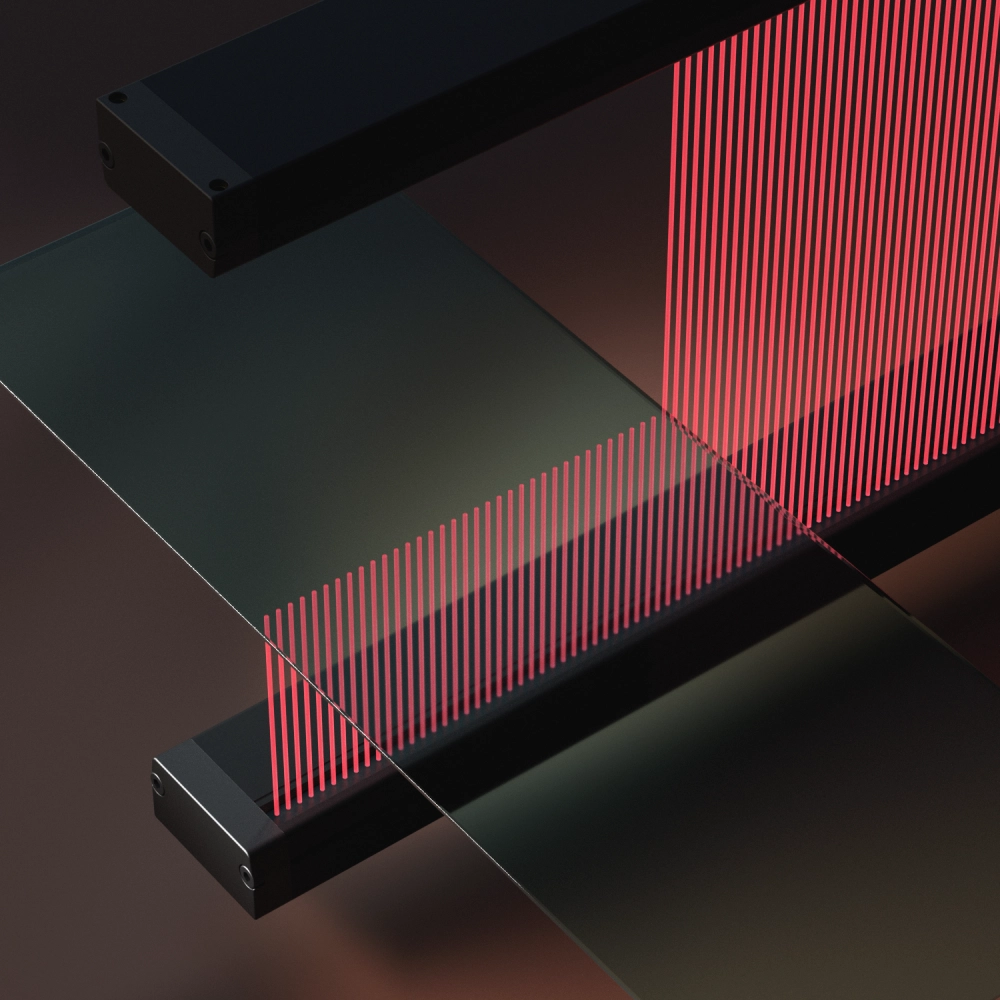
The Polaris barrier generates a grid of parallel infrared beams capable of detecting the presence of objects, determining their shape and position, and transmitting the information to the control system.
The Clearsight series is particularly suitable for detecting transparent objects, monitoring stretch film and glass, and, in the textile industry, for detecting mesh fabrics.
Automatic calibration
The system can automatically regulate the intensity of each beam, allowing for reliable detection of transparent or low-contrast objects.
Application example
Stretch Film Inspection The system is capable of detecting any holes or tears after the processing of transparent stretch films with thicknesses starting from 2 microns.
Mesh Fabric Inspection The system can provide material width information and detect possible defects such as holes or tears.
Hole Counting and Position Detection The system can detect any holes in the material and communicate their position to the PLC via PNP output or ModBus RTU.
Edge Tear Detection The system can detect tears along the outer edges of the material being processed.
Material Tear Detection The system can detect whether a tear has occurred by checking for the presence or absence of the material during processing.
Material Position and Width Measurement The system can provide the position and width of the material being processed.
Glass Measurement The system is capable of detecting glass of any type or color and measuring its shape.
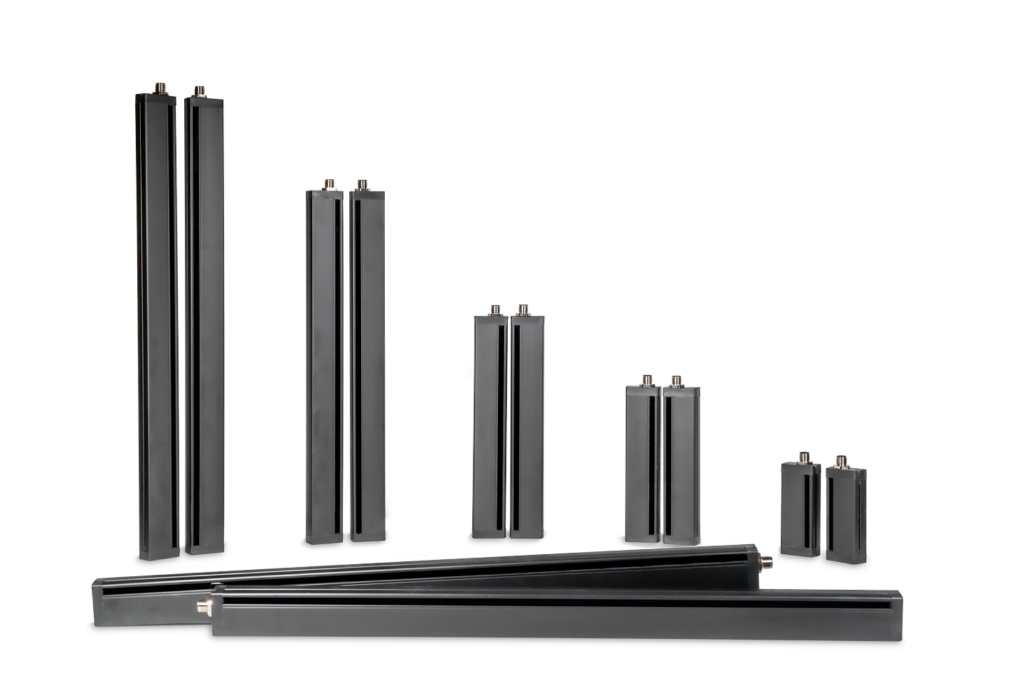
Our model
The high flexibility offered by the Polaris Clearsight series allows the barrier to be adapted to any type of application.
Discover the full range by downloading the datasheet below.
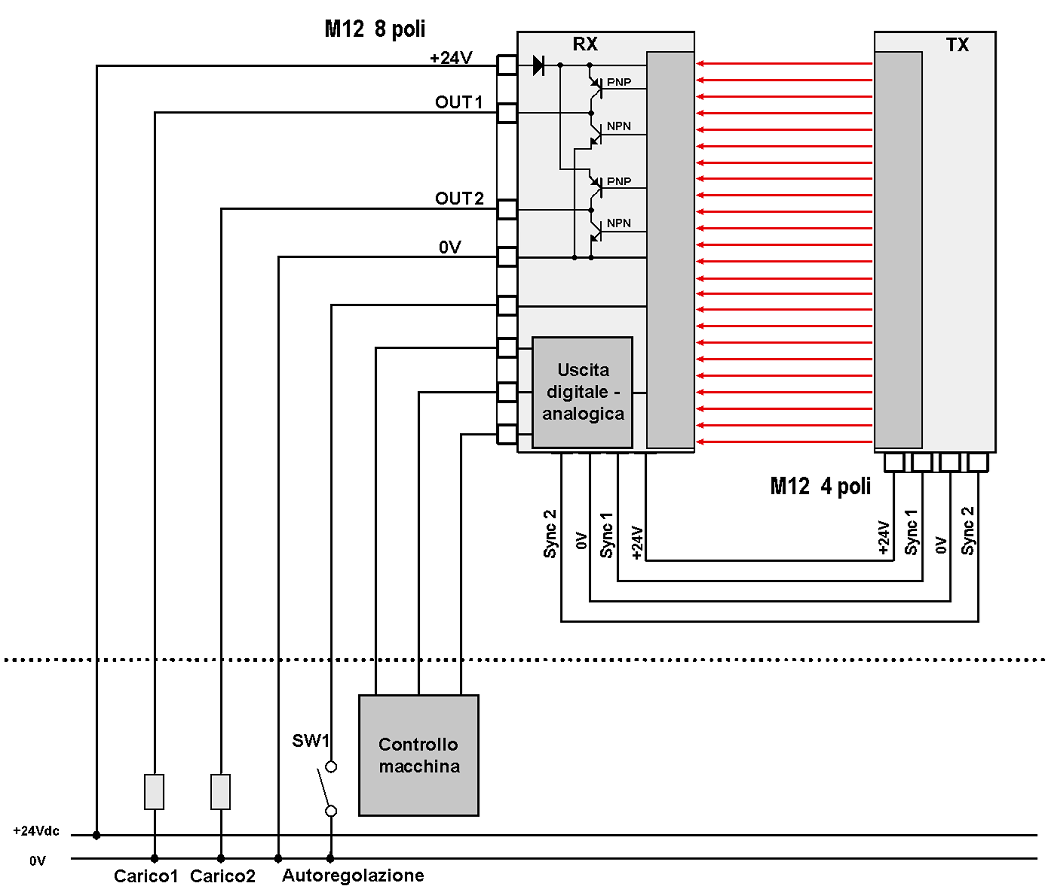
The barrier is equipped with an RS485 ModBus RTU output that provides information on the width and position of the detected object. This output can be configured via software, allowing users to set communication parameters, data transmission mode, and object and hole memory functions.
In addition to the RS485 ModBus RTU output, two PNP outputs are available to indicate material presence and hole detection — without the need to specify the material’s width or position. The system automatically identifies the area to be inspected for holes. All control and communication circuits are integrated within the barrier, so no external modules are required.
More than 200 customizable models are available, with over 20 configuration options.